A Taj Mahal travel guide is essential for making the most of a visit to one of India's most recognisable monuments. Located in Agra, Uttar Pradesh, the Taj Mahal is a UNESCO World Heritage Site and one of the finest surviving examples of Mughal architecture. Built by Emperor Shah Jahan in memory of Mumtaz Mahal, the monument combines white marble, monumental symmetry, Persian-inspired garden planning, calligraphy and intricate stone inlay.
This Taj Mahal travel guide covers everything from the monument's history and architecture to visiting hours, the best time to arrive, nearby attractions, photography opportunities and practical planning advice.
This post contains affiliate links. If you choose to book through them, a small commission may be earned at no additional cost to you. Your support genuinely helps keep the blog running and allows continued creation of high-quality travel guides. Thank you for being here and supporting this journey.
Also Read - Weekend Trips from Gurgaon: Best Places for a 2-Day Escape
Taj Mahal at a Glance
| Information | Details |
|---|---|
| Location | Agra, Uttar Pradesh, India |
| River | Yamuna |
| Architectural tradition | Mughal / Indo-Islamic |
| Construction | Began in 1632 |
| Main mausoleum completed | 1648 |
| UNESCO inscription | 1983 |
| Closed | Fridays |
| Opening | 30 minutes before sunrise |
| Closing | 30 minutes before sunset |
The exact visitor arrangements can change, so travellers should verify official information before travelling. Current Incredible India guidance states that the Taj Mahal opens 30 minutes before sunrise and closes 30 minutes before sunset, with Fridays excluded from normal visitor access.
History of the Taj Mahal
Understanding the history makes a Taj Mahal travel guide much more meaningful. Shah Jahan commissioned the monument following the death of his wife Mumtaz Mahal in 1631. Construction of the principal mausoleum began in 1632 and was completed in 1648, while the surrounding buildings and elements of the complex were completed later. UNESCO identifies Ustad-Ahmad Lahori as the principal architect associated with the project.
The complex eventually included the main mausoleum, mosque, guest house, gateway, garden and associated structures. Craftspeople including stone-cutters, inlayers, carvers, calligraphers and dome builders were brought from across the Mughal Empire and from regions including Central Asia and Iran.
For anyone following a Taj Mahal travel guide, this is important because the monument is more than a single marble building. It is a carefully planned architectural complex.
Why Is the Taj Mahal So Famous?
The Taj Mahal is celebrated for the extraordinary balance between architecture, landscape and decorative craftsmanship. UNESCO describes it as a masterpiece of Indo-Islamic architecture and highlights its combination of symmetry, proportion, light and shadow.
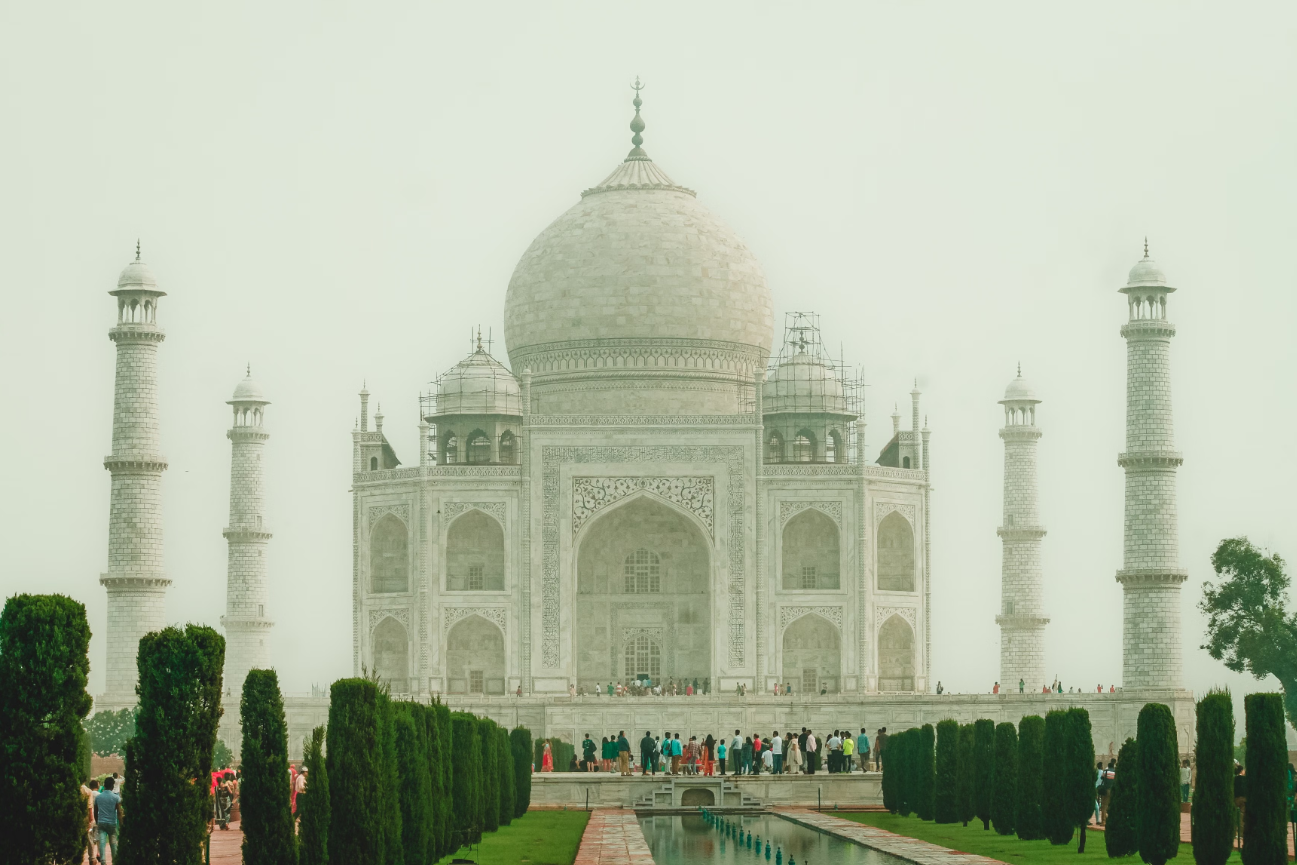
The central mausoleum stands on a raised platform with four minarets at its corners. The main chamber is octagonal, while the exterior combines arches, domes and recessed forms to create changing patterns of light and shadow.
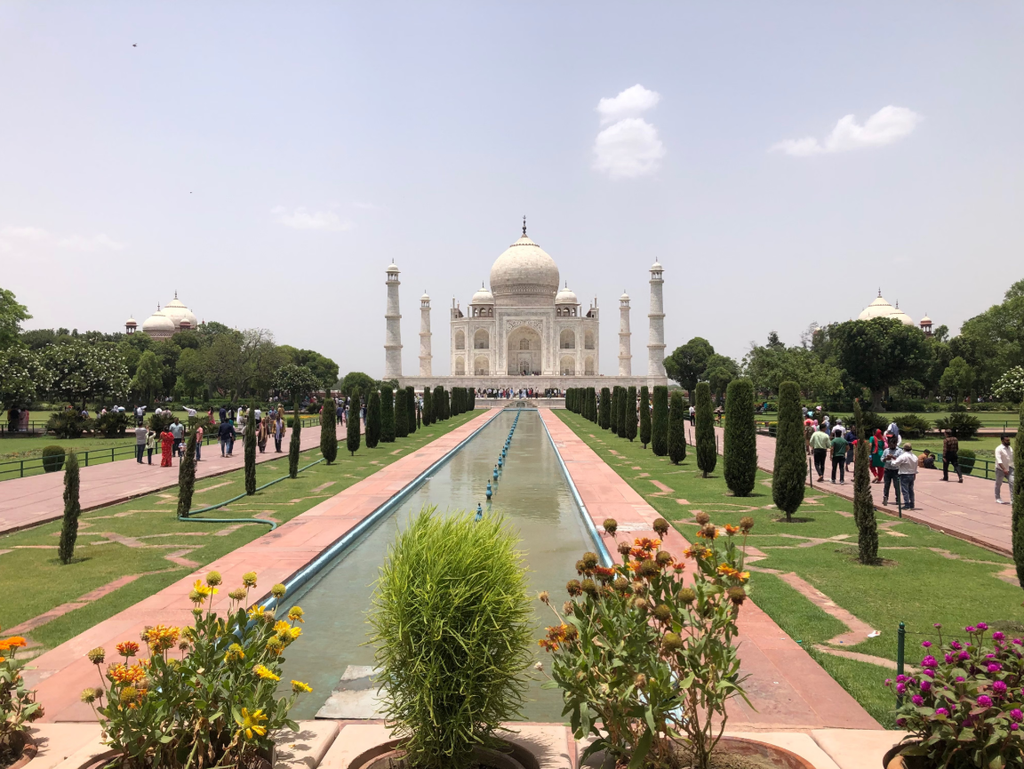
One particularly interesting feature is the garden. Instead of placing the mausoleum exactly in the centre of the traditional charbagh garden, the architects positioned it toward the northern end. UNESCO notes that this arrangement creates greater visual depth and perspective as visitors approach the monument.
What to See Inside the Taj Mahal Complex
A good Taj Mahal travel guide should not focus only on the famous front photograph. Give yourself time to examine the entire complex.
Main Gateway
The monumental southern gateway provides the dramatic transition between the outer area and the formal Mughal garden. Its scale prepares visitors for the mausoleum beyond.
Charbagh Garden
The garden follows a geometric four-part design associated with Persian and Timurid garden traditions. Water channels, pathways and lawns create the long perspective that makes the Taj Mahal appear even more imposing.
Main Mausoleum
The white marble mausoleum is the centrepiece. Its large double dome, arches and four minarets create the familiar silhouette seen in photographs around the world.
Marble Inlay
Look closely at the decorative work. Semi-precious stones were used to create floral and geometric patterns in the marble. UNESCO highlights the quality of the inlay work and the craftsmanship of the marble lattice screen surrounding the cenotaphs.
Cenotaphs
Inside the main chamber are the symbolic cenotaphs of Mumtaz Mahal and Shah Jahan. The actual graves are located in the lower crypt, consistent with Mughal funerary practice.
Taj Mahal Timings
Current official tourism information states that the Taj Mahal opens 30 minutes before sunrise and closes 30 minutes before sunset. It is closed to general visitors on Fridays.
This makes arriving early one of the most useful recommendations in any Taj Mahal travel guide. Early morning offers softer light, potentially more comfortable temperatures and the opportunity to experience the monument before the busiest part of the day.
Night viewing is a separate experience and is subject to specific arrangements and dates. Check the latest official visitor information before planning a night visit.
Best Time to Visit the Taj Mahal
The most comfortable period for a Taj Mahal travel guide itinerary is generally from October through March. Winter temperatures make walking around the extensive complex easier than during Agra's hot summer months.
December and January can bring foggy mornings, particularly around sunrise. This can sometimes obscure distant views of the monument but also produces atmospheric photographs.
February and March can offer pleasant sightseeing conditions before temperatures rise substantially.
April through June can become very hot, making early morning visits particularly valuable. The monsoon months can bring humidity and rain, although the gardens can look lush.
Best Time of Day to Visit
If you want the classic symmetrical view, morning is a strong choice. Arriving close to opening time can also reduce exposure to midday heat.
A Taj Mahal travel guide for photographers should consider changing light throughout the day. The marble can appear cooler in early morning and warmer as sunlight strengthens.
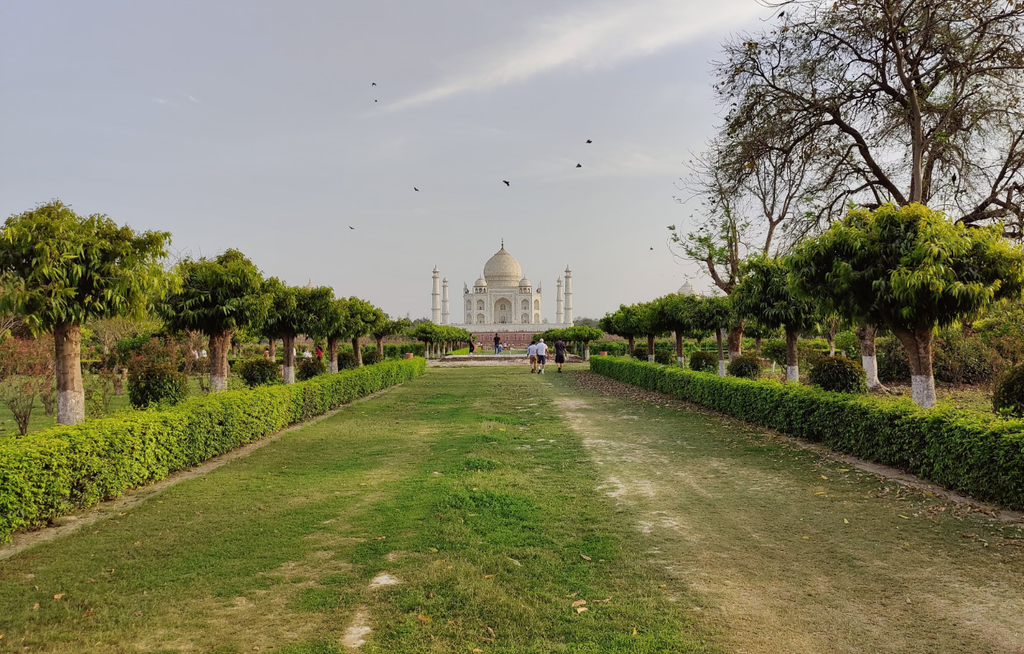
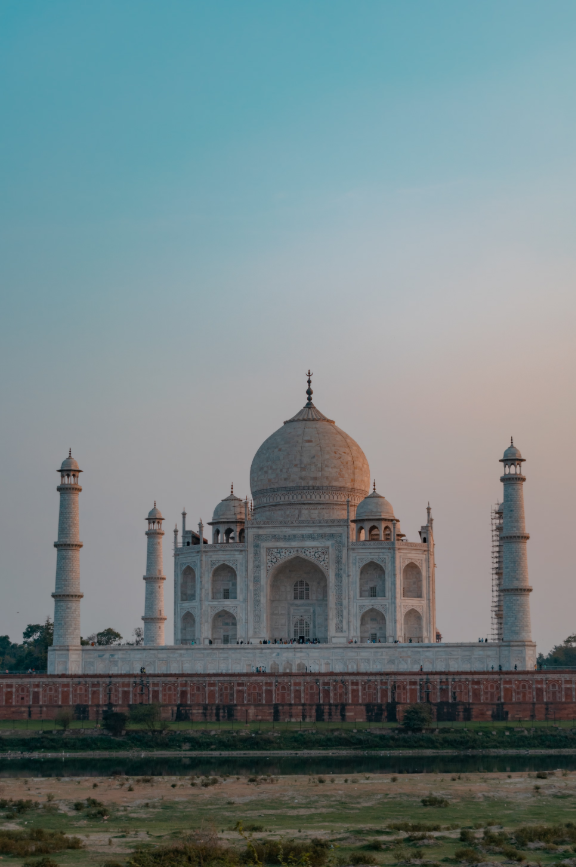
For a different perspective, visit Mehtab Bagh, the Mughal garden located across the Yamuna. It provides a view toward the Taj Mahal from the opposite riverbank and is particularly interesting around sunset. Incredible India also recommends Mehtab Bagh as a complementary viewpoint.
Taj Mahal Tickets and Entry
Ticket prices and access arrangements can change, so check the official visitor information immediately before your trip.
A useful Taj Mahal travel guide recommendation is to distinguish between entry to the wider complex and access arrangements associated with the main mausoleum. Travellers should also check the latest rules regarding permitted items and security screening.
The official Incredible India information identifies the Western and Eastern Gates as entry points, while the Southern Gate is used only for exit.
How to Reach Agra
Agra is well connected with Delhi and other major North Indian cities.
From Delhi
Road and rail connections make Agra straightforward to reach from Delhi. Many travellers visit as a day trip, although staying overnight allows more time to explore Agra's heritage.
By Train
Agra has major railway connections, making rail travel a practical choice for visitors travelling from Delhi and other northern cities.
By Road
Driving or taking a coach provides flexibility, especially for travellers combining Agra with destinations such as Mathura, Vrindavan, Fatehpur Sikri or Jaipur.
For a relaxed Taj Mahal travel guide itinerary, spending at least one night in Agra is preferable to rushing through the city.
Best Places to Stay in Agra
Choose accommodation according to your itinerary rather than simply searching for the closest hotel to the monument.
Hotels around Taj East Gate and the Tajganj area can be convenient for early visits. Central Agra properties can work well for travellers who want easier access to restaurants, markets and other attractions.
If you plan to explore Agra Fort, Itimad-ud-Daulah and Fatehpur Sikri, location becomes less important than transport convenience.
Places to Visit Near the Taj Mahal
A complete Taj Mahal travel guide should include Agra's other Mughal landmarks.
Agra Fort
Agra Fort is another UNESCO World Heritage Site and provides important historical context for the Mughal period. It contains palaces, courtyards and defensive structures developed under successive Mughal rulers.
Itimad-ud-Daulah's Tomb
Often called the "Baby Taj", Itimad-ud-Daulah's Tomb is an elegant marble mausoleum famous for delicate inlay work and marble screens. It was commissioned by Nur Jahan for her father, Mirza Ghiyas Beg.
Mehtab Bagh
Located across the Yamuna, Mehtab Bagh offers a different perspective of the Taj Mahal and is useful for photographers looking beyond the conventional entrance view.
Fatehpur Sikri
Located outside central Agra, Fatehpur Sikri makes a worthwhile addition to a longer Mughal heritage itinerary. The historic city contains important Mughal-era buildings and religious architecture.
Taj Mahal Photography Tips
Photography is an important part of almost every Taj Mahal travel guide, but the best images often come from looking beyond the standard postcard composition.
Arrive early for softer light and experiment with reflections in the central water channel. Use the gateway as a natural frame and look for architectural details such as jali screens, arches and floral inlay.
For a different composition, consider Mehtab Bagh across the Yamuna. The viewpoint places more distance between photographer and monument and provides a broader landscape context.
Inside the mausoleum, follow all current photography restrictions and security instructions.
What to Wear
Agra can be extremely hot during summer, so lightweight clothing is practical for daytime visits. During winter, mornings can be surprisingly cold, particularly when fog is present.
Comfortable footwear is essential because a visit involves considerable walking. Modest clothing is also advisable when visiting religious or historic sites around Agra.
Carry water, but check current security rules before entering the Taj Mahal complex because restrictions on bags and other items can change.
One-Day Taj Mahal Itinerary
A practical Taj Mahal travel guide itinerary for one day could look like this:
6:00-8:30 am: Taj Mahal visit
9:00-10:00 am: Breakfast
10:30 am-12:30 pm: Agra Fort
1:00-2:00 pm: Lunch
2:30-3:30 pm: Itimad-ud-Daulah's Tomb
4:00-5:30 pm: Mehtab Bagh or local heritage area
Evening: Agra markets and dinner
An overnight stay is better if you want to explore Fatehpur Sikri or enjoy Agra at a slower pace.
Practical Tips for First-Time Visitors
Before following any Taj Mahal travel guide, check the latest official opening arrangements because timings, security procedures and ticketing rules can change.
Remember these essentials:
- The Taj Mahal is closed on Fridays for general visitors.
- Arrive early, especially during busy periods.
- Wear comfortable walking shoes.
- Allow at least two to three hours for the main complex.
- Keep valuables and unnecessary luggage to a minimum.
- Follow photography and security restrictions.
- Consider visiting Agra Fort on the same day.
- Add Mehtab Bagh for an alternative Taj viewpoint.
- Carry sun protection during warmer months.
- Check official information before travelling.
Is the Taj Mahal Worth Visiting?
For most visitors interested in history, architecture and cultural heritage, the Taj Mahal provides an unusually complete experience because the monument's design, garden, decoration and historical story are closely connected.
UNESCO recognised the Taj Mahal as a World Heritage Site in 1983, describing it as an exceptional architectural and artistic achievement.
The monument is also part of a wider Agra heritage landscape. Visiting the Taj Mahal alongside Agra Fort, Itimad-ud-Daulah and Mehtab Bagh reveals more about Mughal architecture than seeing the mausoleum alone.
Final Thoughts
The most useful Taj Mahal travel guide is one that treats the monument as both an architectural masterpiece and a historical complex. Understanding why Shah Jahan commissioned it, how its gardens were planned and how its marble decoration was created makes the visit much more rewarding.
Plan around the official opening hours, avoid Friday for a standard visit, arrive early when possible and leave enough time for Agra Fort and other nearby landmarks.
With thoughtful planning, a Taj Mahal travel guide itinerary can turn a short visit to Agra into a broader journey through Mughal history, architecture, craftsmanship and one of India's most important World Heritage sites.